
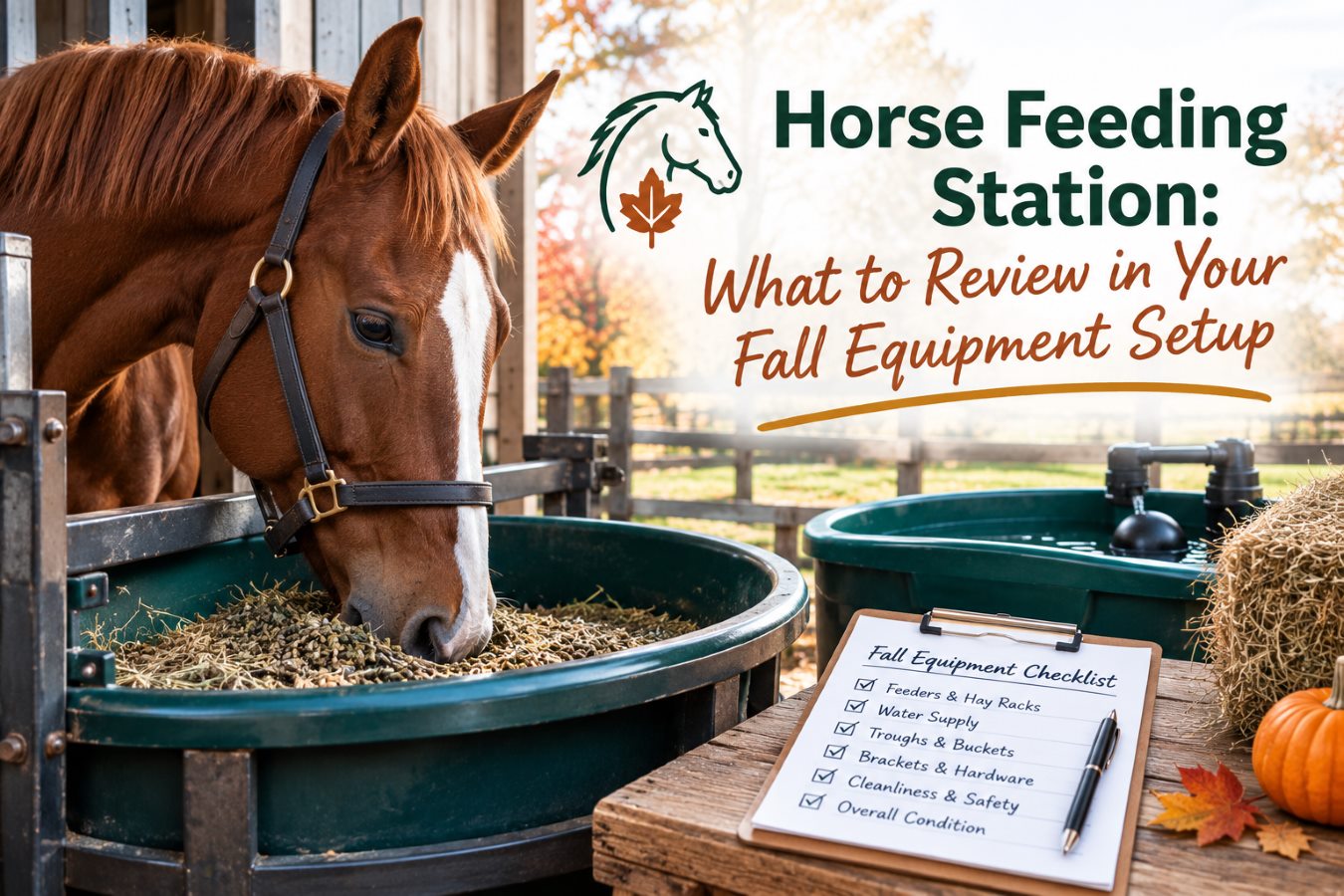
A reliable feeding routine depends on more than the feed itself. The bucket’s location, mounting arrangement, cleaning access, and daily handling all affect how practical the setup is.
October is a useful time to review your horse feeding station before travel, schedule changes, or a busier season make small equipment frustrations harder to manage. The focus here is the station and workflow, not changes to a horse’s diet.
Lock N Load Feed Systems offers locking feed buckets and related mounting products. This guide helps you identify the equipment questions to ask before choosing a system or adjusting an existing arrangement.
Observe the Routine Before Buying New Equipment
Watch how the station is used during an ordinary feeding period. Note where you prepare the bucket, how you carry it, and what happens when it is placed.
Does the bucket move in a way that creates difficulty? Is it awkward to remove for cleaning? Does the location make it hard to identify which horse should receive which bucket?
Record the recurring problem rather than assuming the answer is a new product. The issue might involve placement, compatibility, handling, or the broader layout.
If a concern involves a horse’s behavior, feeding posture, intake, or health, discuss it with an appropriate veterinarian or equine professional. Equipment review does not replace that guidance.
Separate the Equipment Question From the Nutrition Question
A feeder can support an organized routine, but it does not determine the correct ration for a particular horse.
Do not change feed amounts, feeding frequency, or supplements because you are changing buckets. Those decisions should follow the horse’s care plan and qualified advice.
When evaluating a product, keep the question specific: does the equipment suit the intended mounting surface and workflow?
This distinction helps you assess the product fairly. Mechanical features should not be treated as promises about animal health or a universal solution to feeding behavior.
Look at Bucket Movement and Retention
A loose or unsuitable bucket arrangement can be inconvenient. Before replacing it, identify how and when movement occurs.
Is the attachment insecure, the supporting surface unsuitable, or the bucket itself worn? Does the setup require improvised parts that were not designed for the application?
Ask the manufacturer how its retention mechanism works and what compatibility requirements apply.
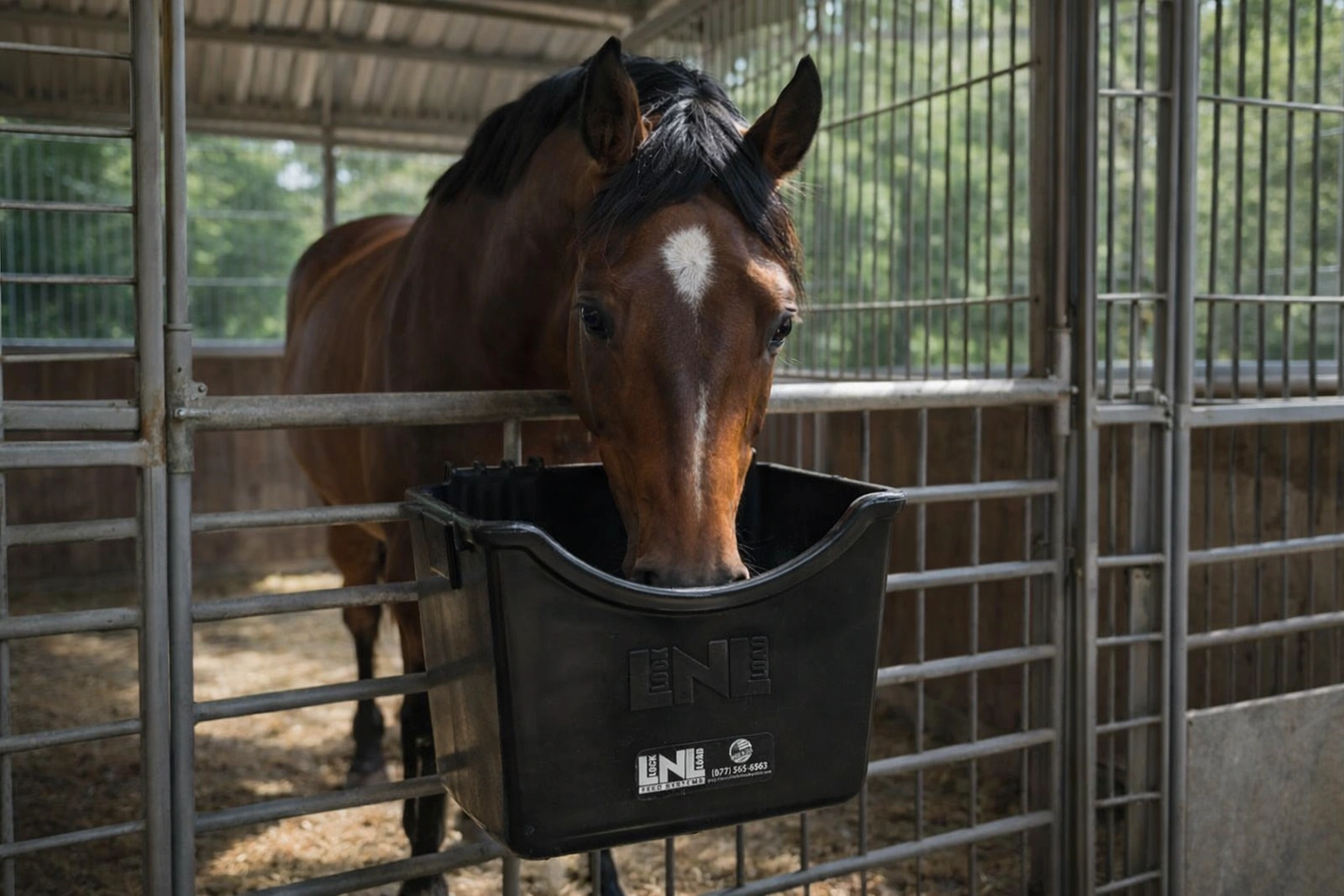
Lock N Load describes a locking bucket and mounting arrangement on its how-it-works page. Review the actual system rather than assuming that every locking feeder works the same way.
Avoid absolute expectations
A secure mounting design does not justify a promise that a horse will never spill feed or that a component cannot be damaged.
Discuss the intended use and follow the manufacturer’s directions. Inspect the installed system and seek advice if anything does not fit or operate as expected.
Confirm Mounting Compatibility Before Ordering
Describe the surface where you intend to place the bucket. Include the fence or wall type, available dimensions, and any limitations.
Send photographs if useful, but ask what measurements the manufacturer needs. A general image may not establish that the attachment fits correctly.
Clarify whether a particular mounting product is required. Lock N Load’s website lists related mounting options, including stud-mount products, so the intended application should be confirmed.
Do not assume universal fence compatibility or substitute unrelated fasteners because they appear to work. The attachment should follow the product’s specified arrangement and instructions.
Review Placement With the Horse and Handler in Mind
Placement affects both animal access and daily handling. Ask the appropriate equine professional about suitability where you have concerns about posture or behavior.
For the handler, consider the route to the station, the space to approach it, and how the bucket is removed.
Avoid creating an arrangement that requires reaching through an awkward opening or stepping around unstable equipment. The practical route should be part of the plan.
Check the surrounding area for damaged or protruding components and have concerns addressed appropriately. A new bucket should not conceal an unsuitable supporting structure.
Make Cleaning Access Part of the Decision
Before choosing a feeder, think about how it will be removed, emptied, cleaned, dried, and returned to use.
Ask the manufacturer what care methods are appropriate for the actual material and components. Follow product guidance rather than applying a harsh cleaner based on an unrelated bucket.
Check whether corners, attachments, and mounting pieces can be inspected as part of the routine. If a component is hard to access, clarify the recommended maintenance approach.
Cleaning is easier to maintain when the process fits the workflow. A system that looks convenient while mounted may be less practical if removal or reinstallation is difficult for the person using it.
Inspect Existing Equipment Before the Season Changes
Look for cracks, rough edges, damaged attachments, and any part that no longer operates normally. Inspect without forcing a mechanism or modifying it.
Ask the supplier about replacement components and when equipment should be taken out of service. Do not keep using a questionable attachment simply because the bucket itself appears intact.
Record the product model and mounting arrangement. This makes support inquiries more precise.
If the equipment has been moved between locations, review compatibility again. A system suitable for one mounting surface is not automatically appropriate for another.
Organize a Multi-Horse Workflow Clearly
Where several horses are managed, clear identification can reduce confusion during preparation and distribution.
Use a consistent system for identifying buckets and the animals or stations they belong to. Ensure the labels and method fit the equipment and daily care procedures.
Keep feeding instructions separate and readable for the people responsible for the routine. A new bucket system should support the established plan, not make it harder to follow.
If someone else will handle feeding during travel, show the complete process. Include mounting, removal, cleaning, and what to do if something does not work correctly.
Test the handoff before relying on it
Ask the other handler to demonstrate the process while you are available to answer questions.
This can reveal an unclear label or an unfamiliar release mechanism before it becomes a problem during your absence.
Think Through Portability Without Assuming Every Location Fits
A portable arrangement can be appealing for travel or temporary use, but the destination still needs a suitable setup.
Before moving equipment, check the mounting conditions and the product requirements. Confirm which pieces need to travel together.
Inspect components after transport and before use. If the equipment has been damaged or the intended mount is unavailable, ask the manufacturer about appropriate alternatives.
Do not improvise a temporary attachment merely to preserve the same routine. Portability should work within the system’s intended use.
Prepare Questions for the Manufacturer
Write down the bucket size you are considering, the mounting location, and the problem you want the equipment to address.
Ask which product and mount are appropriate, what is included, and what installation and maintenance instructions are provided.
Clarify how the bucket is secured and released, what replacement parts are available, and how to obtain support.
If portability matters, describe the second location too. A complete brief helps the manufacturer discuss compatibility rather than offering a recommendation based on an incomplete description.
Make an October Equipment Review Useful
Start with one station and document what works and what does not. Inspect the bucket, attachments, supporting surface, and handling route.
Address worn or unsuitable components before focusing on convenience features. Then compare equipment against the actual requirements.
Keep nutrition and animal-care questions with qualified professionals. Use the product conversation to resolve mounting, operation, and maintenance questions.
A well-planned horse feeding station is one the horse can use appropriately and the responsible handler can operate according to the care plan and product instructions.
Keep Equipment Information With the Care Instructions
Store the product instructions and relevant support details where the responsible handlers can find them. Include the model or mounting arrangement so a question can be described accurately.
Keep those equipment notes distinct from ration instructions, while making both available to the people following the routine.
If a component is replaced, update the record and show handlers how it operates. Do not assume that a similar-looking part uses the same installation or release process.
This is especially helpful before someone else takes over during travel. A clear handoff includes both what to do normally and whom to contact if the station cannot be used as intended.
Frequently Asked Questions
What should I check at a horse feeding station this fall?
Review bucket condition, mounting compatibility, placement, cleaning access, and the daily handling process. Note recurring problems and inspect for damaged parts. Questions about feeding posture, behavior, or intake should be discussed with an appropriate equine professional rather than resolved through equipment changes alone.
Does a locking feed bucket eliminate all spills?
No product should be assumed to eliminate every spill or prevent all damage. A locking arrangement addresses retention as designed, but the result depends on appropriate installation and use. Review the mechanism, compatibility, and instructions with the manufacturer and maintain realistic expectations for the application.
Will a fence-mounted feeder fit any fence?
Do not assume universal fit. Fence material, dimensions, construction, and the specific mounting product matter. Provide measurements and photographs to the manufacturer and confirm the appropriate arrangement. Avoid substituting improvised components or forcing an attachment onto a surface it was not designed to use.
Can I change my horse’s ration when I change buckets?
Bucket selection does not establish nutritional needs. Follow the existing care plan and consult a veterinarian or qualified equine nutrition professional about diet changes. When comparing equipment, focus on capacity, compatibility, operation, and cleaning rather than treating the product as guidance for feeding amounts.
Where can I learn how Lock N Load equipment works?
The Lock N Load Feed Systems website explains its locking bucket arrangement and lists related products. Review the how-it-works page and contact the company with your proposed mounting location. Ask about the exact product, required components, care instructions, and suitability before placing an order.
Match the System to Your Feeding Routine
To review equipment for your horse feeding station, explore how Lock N Load Feed Systems works or call 855-552-3751. Share your mounting details and workflow questions to discuss a suitable product arrangement.