
Feed that ends up on the ground is more than a nuisance. It can increase costs, make it harder to know what each horse actually consumed, create messy feeding areas, and attract pests or wildlife. If you are trying to learn how to reduce horse feed waste, start by looking at the entire feeding routine: what you feed, how much you offer, where feed is stored, how it is delivered, and whether the feeder stays where you put it.
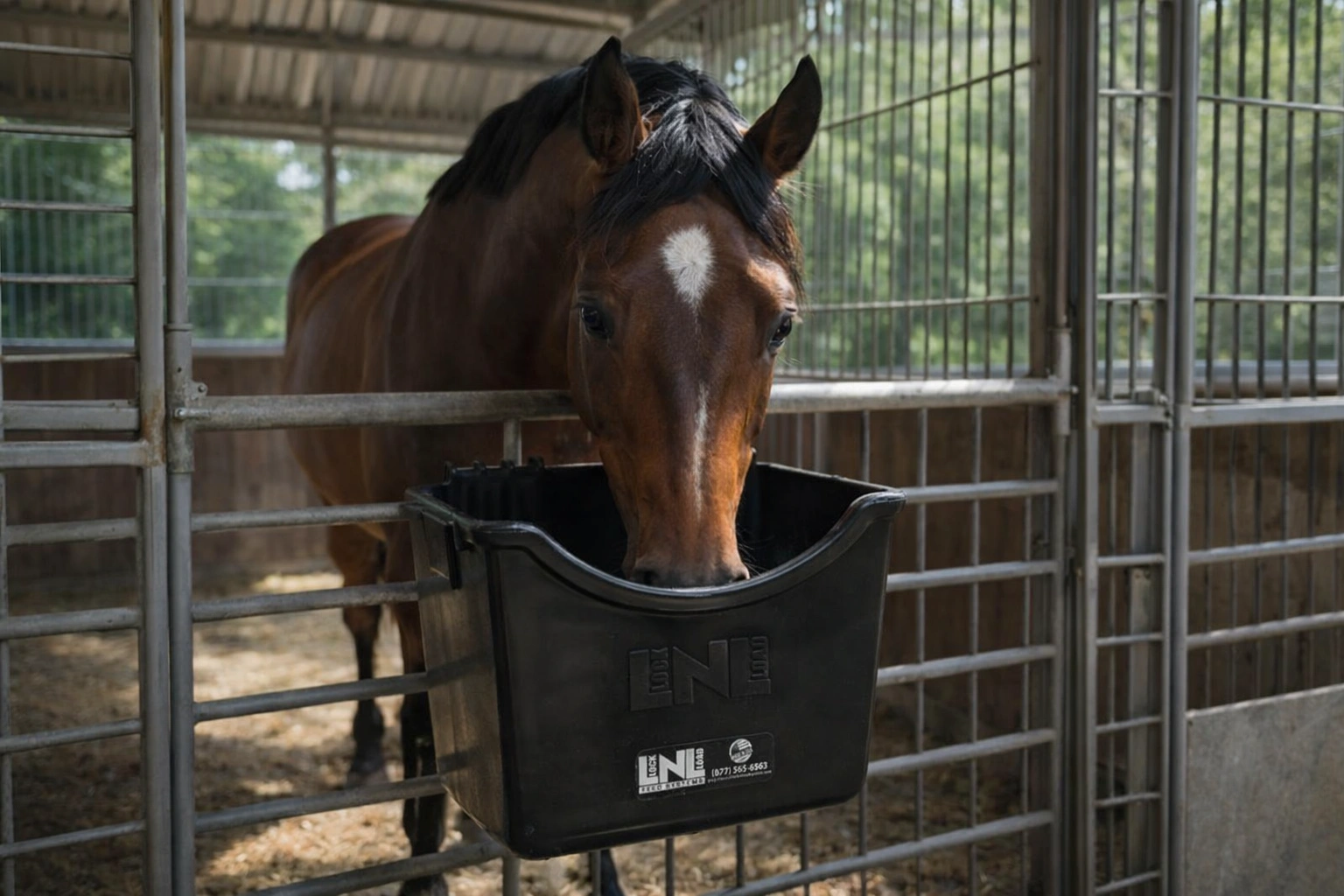
In pasture settings, traditional buckets can be tipped, dragged, knocked loose, or stepped on. Horses may push them while eating or move them around after the feed is gone. A secure horse feeder bucket can reduce one source of waste by keeping the feeding container in a consistent location.
Lock N Load Feed System makes a fence-mounted feeder designed for horses and livestock. The Lock N Load Feed Bucket locks onto fencing to help prevent tipping, spills, and buckets being dragged around the pasture.
Feeder design is only one part of a good feeding program. Nutrition, forage management, portion control, storage, and horse behavior matter too.
First, Identify Where the Feed Is Being Lost
“Feed waste” can happen at several points.
Storage Waste
Feed can be lost before it reaches the horse because of:
- moisture;
- rodents;
- insects;
- torn bags;
- contaminated bins;
- mold;
- spilled scoops.
Feeding Waste
Once feed is served, waste may occur when:
- buckets tip;
- horses paw at feeders;
- animals pull feed onto the ground;
- horses compete and move between buckets;
- feeders are overfilled;
- rain enters outdoor feed.
Forage Waste
Hay can be trampled, urinated on, mixed into mud, or spread around the pasture.
University research shows feeder design can have a major effect on hay waste. The University of Minnesota Extension’s horse nutrition research reports that feeders reduce hay waste compared with feeding hay directly on the ground.
Grain and concentrate waste requires a somewhat different strategy, but the underlying principle is similar: keep feed contained, protected, and appropriately portioned.
Feed the Correct Amount
Overfeeding is one of the simplest forms of waste.
Horses have different nutritional needs based on:
- body weight;
- age;
- workload;
- growth;
- pregnancy or lactation;
- metabolism;
- forage quality;
- health.
Use weight rather than a generic “scoop” whenever accuracy matters. Two feeds can have very different weights per scoop.
A veterinarian or equine nutrition professional can help determine an appropriate ration.
Reducing waste should never mean underfeeding. The goal is to give the horse the correct amount and make sure that amount is actually consumed.
Make Forage the Foundation
For most horses, forage is the primary part of the diet.
The University of Minnesota Extension notes that forage should make up at least half of the daily ration and that many horses can meet much or all of their energy needs from quality hay.
If concentrate is being used to compensate for poor forage quality, improving the forage program may reduce unnecessary supplemental feed.
Have hay analyzed when nutritional precision is important.
Use a Feeder Instead of Feeding on the Ground
Ground feeding may seem natural because horses graze from the ground, but loose hay and concentrate can be contaminated by soil, manure, mud, and moisture.
For hay, research from the University of Minnesota found substantial differences in waste between no-feeder and feeder systems. In its round-bale research, using a round-bale feeder reduced waste compared with no feeder.
For grain or pelleted feed, a bucket or trough helps keep the ration separate from the ground.
Secure the Bucket So It Cannot Be Tipped Easily
Pasture horses are hard on equipment.
A loose bucket can be:
- pushed over;
- kicked;
- dragged;
- stepped on;
- flipped;
- used as a toy.
A fence feeder for horses keeps the feeding location consistent and can reduce the opportunity for the entire ration to be dumped.
Lock N Load was developed around that specific frustration. Its feeder is designed to attach securely to a fence without tools and can be removed or repositioned as needed.
The company describes the system as suitable for horses, cattle, sheep, and other livestock.
Choose the Right Feeding Height
Feeding position affects comfort, safety, and waste.
Forage is generally best offered in a way that supports natural head and neck position while minimizing contamination.
For concentrate buckets mounted to fencing, position should:
- allow comfortable access;
- avoid entrapment hazards;
- prevent horses from getting legs caught;
- reduce interference from rails;
- fit the fence type;
- account for horse size.
Follow the feeder manufacturer’s installation recommendations.
Avoid Overfilling Feed Buckets
A bucket filled to the brim is easier to spill.
If a horse roots through feed, pushes it with the muzzle, or eats aggressively, a shallower portion can stay contained more effectively.
Large concentrate meals may also be nutritionally inappropriate for some horses. Meal size should be based on professional feeding guidance.
If the daily ration requires multiple feedings, dividing it may improve both management and containment.
Separate Horses That Compete for Feed
Group feeding can create waste even when the feeders are secure.
Dominant horses may chase others away, move between buckets, or cause subordinate horses to eat too quickly.
Competition can result in:
- spilled feed;
- unequal intake;
- stress;
- injury risk.
Provide enough feeding stations and enough spacing so horses can eat without constant displacement.
In some groups, temporary separation during concentrate feeding is safer.
Keep the Feeding Area Dry
Mud complicates almost every pasture task.
A well-drained feeding location can:
- reduce hoof damage;
- keep dropped feed from mixing with mud;
- make cleanup easier;
- improve access for people and equipment.
Consider rotating feeding areas or improving high-traffic zones when soil becomes heavily disturbed.
Do not place feeders in low spots where water collects.
Clean Feeders Regularly
Old feed, saliva, moisture, and dirt can accumulate.
A regular cleaning schedule helps prevent:
- mold;
- spoiled feed;
- insects;
- odors;
- cross-contamination.
Buckets should be easy to remove and clean. One advantage of a movable horse feeding system is the ability to reposition or remove the feeder rather than permanently fastening a difficult-to-clean container.
Store Feed Correctly
A good pasture feeder cannot compensate for poor storage.
Store bagged or bulk concentrate:
- in a dry area;
- off wet floors;
- in rodent-resistant containers;
- away from chemicals;
- with lids secured;
- using first-in, first-out rotation.
Discard feed that is wet, moldy, contaminated, or smells abnormal.
Keep storage areas inaccessible to horses. Accidental access to concentrated feed can become a medical emergency.
Measure Feed Consistently
If several people feed the same horses, inconsistency can create both overfeeding and waste.
Use:
- labeled containers;
- weight-based instructions;
- individual horse charts;
- color coding;
- written feeding routines.
A coffee can or random scoop is not a reliable unit unless the actual feed weight has been measured and documented.
Watch How Each Horse Eats
Some horses eat neatly. Others toss feed with their lips, paw, push the container, or lift buckets.
Observe feeding rather than assuming the equipment works the same for every animal.
Ask:
- Does the horse tip the bucket?
- Does it throw feed?
- Does it eat too quickly?
- Does another horse interrupt it?
- Is the feeder at a comfortable height?
- Is the bucket large enough?
- Does rain enter the bucket?
Small adjustments can reduce recurring waste.
Consider Weather
Pasture feeding is exposed to rain, wind, snow, heat, and mud.
Do not leave concentrate sitting outside long enough to become wet or spoiled.
If severe weather is expected, adjust the feeding routine so feed is offered when horses can consume it promptly.
Wind can also blow lightweight empty buckets around, another reason secure attachment can be useful.
Reduce Hay Waste Separately
Hay waste and grain waste require different tools.
For round bales, University of Minnesota research found that all tested feeders reduced waste compared with no feeder, but waste varied considerably among designs.
For small square bales, feeder choice also affects waste.
A pasture horse feeder for concentrate should not be assumed to solve hay-management problems. Use the appropriate feeder for the feed type.
Track Feed Cost and Waste
You cannot improve what you do not observe.
For a month, track:
- feed purchased;
- amount fed;
- visible leftovers;
- bucket spills;
- hay waste;
- body condition;
- changes in workload.
If one horse consistently leaves feed, the issue may be palatability, dental condition, illness, competition, or an inappropriate ration rather than equipment.
Unexpected appetite changes should be discussed with a veterinarian.
Use Durable Equipment
Cheap buckets are not inexpensive if they crack, detach, or need frequent replacement.
For outdoor use, evaluate:
- material;
- temperature tolerance;
- mounting system;
- cleanability;
- edge design;
- portability;
- replacement policy.
Lock N Load uses medium-density polyethylene and markets the feeder for daily farm use and temperature extremes. The product is also backed by a one-year replacement warranty according to the company’s site and campaign materials.
Make Repositioning Easy
Pasture management changes.
You may need to:
- rotate grazing areas;
- separate a horse;
- move feeding stations out of mud;
- change paddocks;
- clean the fence line;
- create temporary feeding areas.
A feeder that can be moved without tools can support those changes.
Lock N Load’s attachment system is specifically designed for installation, removal, and repositioning without tools.
A Practical Horse Feed Waste Checklist
To reduce waste:
- Feed a ration appropriate for the individual horse.
- Weigh feed rather than guessing by volume.
- Use quality forage as the diet foundation.
- Store feed in dry, secure containers.
- Keep horses out of feed-storage areas.
- Use feeders rather than placing feed directly on muddy ground.
- Secure buckets so they cannot tip easily.
- Space horses to reduce competition.
- Keep feeding areas drained.
- Clean buckets regularly.
- Adjust for weather.
- Track recurring waste and horse behavior.
No single feeder replaces sound nutrition and management, but good equipment can eliminate avoidable problems.
FAQ
Why does my horse keep tipping its feed bucket?
Horses may tip buckets while rooting for feed, pushing with their muzzle, pawing, playing, or competing with another horse. A securely mounted horse feeder bucket can reduce the opportunity for the entire container to overturn. Also review bucket height, portion size, and whether other horses are crowding the feeding area.
Is it okay to feed horses grain on the ground?
Using a bucket or trough generally keeps concentrate cleaner and makes intake easier to monitor. Feed placed on the ground can mix with soil, manure, mud, and moisture. If a horse requires concentrate, use a clean feeder and follow a veterinarian or equine nutrition professional’s ration guidance.
How can I reduce hay waste in a pasture?
Use an appropriately designed hay feeder and store hay properly. University of Minnesota research has shown that feeder design significantly affects waste and that feeding hay without a feeder can result in much greater losses. Keep hay off wet ground and choose a system suitable for the bale type and horses.
Does a fence feeder help reduce horse feed waste?
It can reduce waste caused by buckets being tipped, knocked around, or dragged. A fence feeder for horses keeps the feeding container in a defined location. It does not prevent every type of waste, so portion control, horse spacing, storage, and cleanup remain important.
How much feed should I give my horse?
The correct amount depends on body weight, forage, age, workload, metabolism, and health. Do not rely on a generic scoop. Weigh the feed and follow the manufacturer’s directions as part of a ration developed with your veterinarian or qualified equine nutrition professional.
How many feeding stations do I need for multiple horses?
Provide enough space and feeding locations to reduce competition and prevent dominant horses from controlling access. Some groups need greater spacing or temporary separation during concentrate feeding. Watch the herd during meals and adjust if horses are being chased or unable to finish their portions.
What is Lock N Load Feed System?
Lock N Load is a fence-mounted horse feeding system designed for horses and livestock. Its bucket locks onto fencing to help prevent tipping, spilling, and dragging. The system can be installed, removed, and repositioned without tools, making it useful for barns, paddocks, pastures, and temporary feeding areas.
Keep More Feed in the Bucket With Lock N Load
Learning how to reduce horse feed waste starts with good nutrition, accurate portions, proper storage, appropriate forage management, clean feeding areas, and equipment that works with horse behavior rather than against it.
If tipped and wandering buckets are part of the problem, the Lock N Load Feed System provides a fence-mounted feeding option designed for horses and livestock. Explore the system online to see how the patented attachment works and whether it fits your pasture or barn setup.